What Market Is Your Game In?
What genre is your game?
It’s not just choosing gameplay; it’s also choosing what market you enter and what players you face.
If the same game is categorized under different tags, what kind of players will it appear in front of?
Let me briefly introduce the markets for various games.
Steam Genres and Tags | Gamalytic
Why do I keep saying simulator simulator simulator
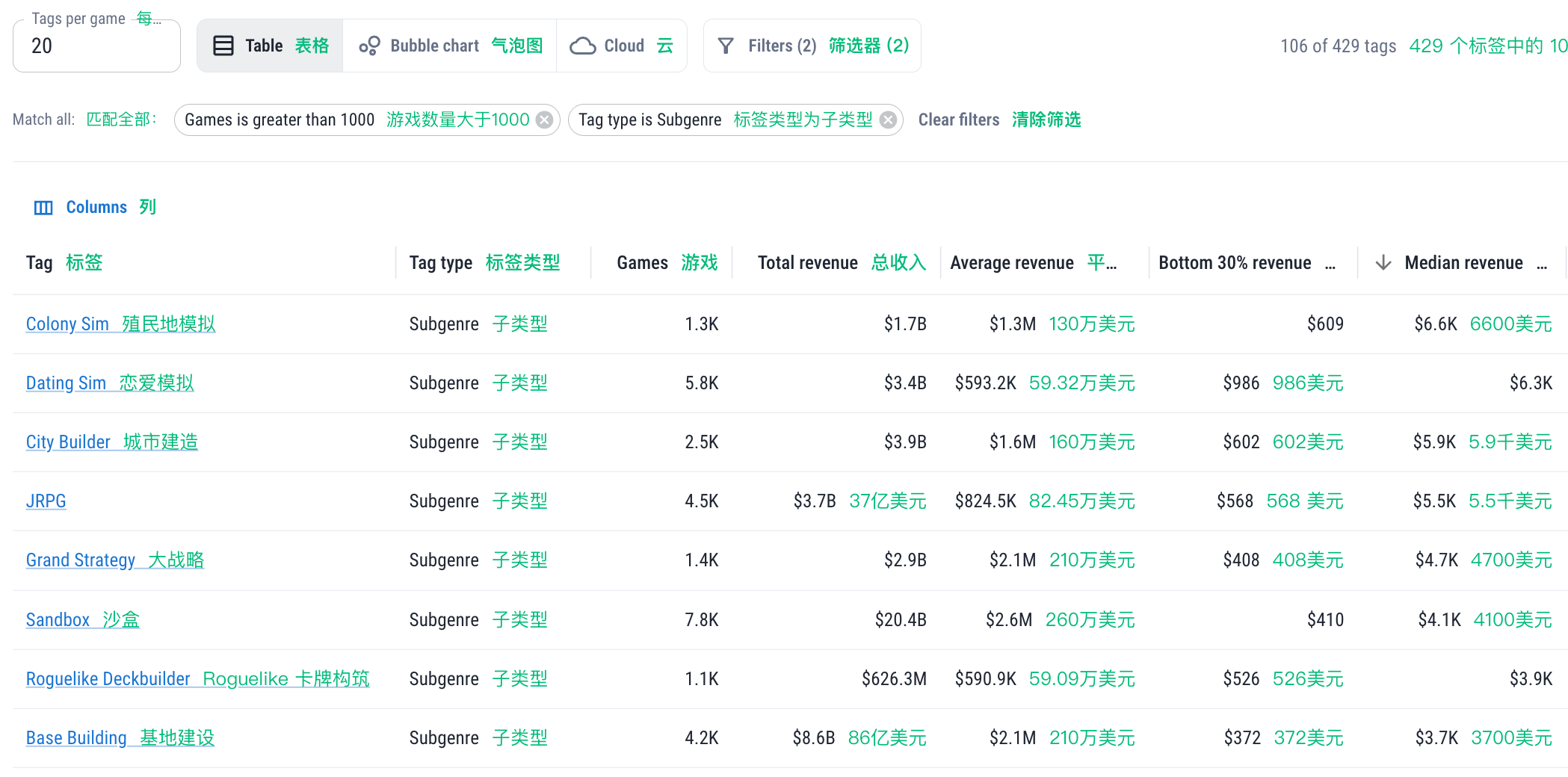
Steam Genres and Tags | Gamalytic
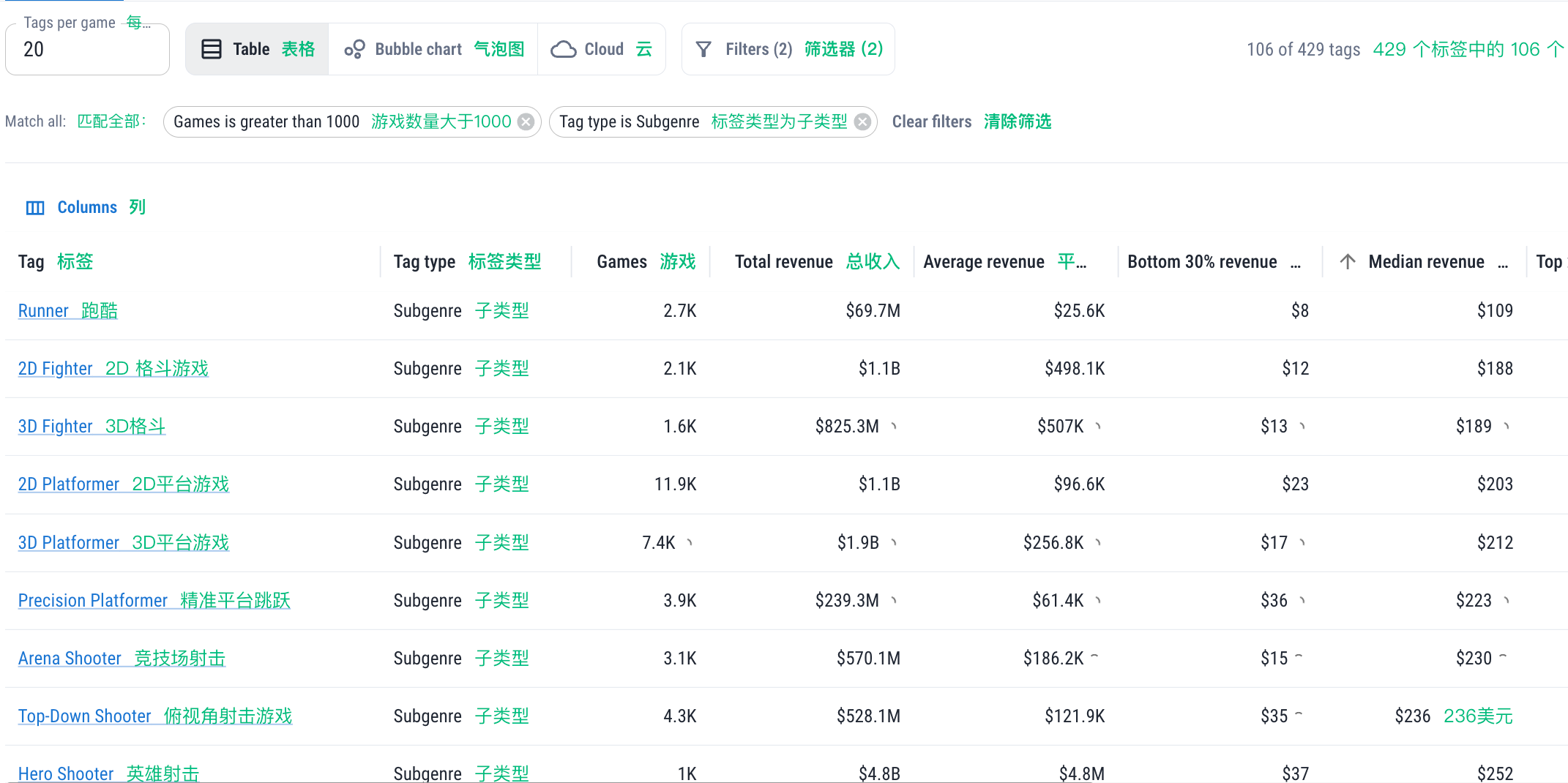
You’re choosing not just a game genre, but a game market.
In other words, you need to know what game you’re making.
The same game with different tag combinations will appear in different player pools.
Choosing tags isn’t just categorization; it’s choosing the player pool you’ll face.
Similar Games Aren’t Enemies; They’re Entry Points
One concept: indie games don’t have absolute competition.
Similar games are both competitors and important clues for finding your target players.
Most games are consumables themselves; once players finish them, it’s over (counterexamples: constantly updated competitive games or gacha games and such)
So most indie games aren’t in a competitive relationship but a friendly one.
For example, after players finish a game and think it’s fun, they’ll look for similar games.
So if your game’s lane has similar or same-genre games, you don’t need to worry.
So what we should do instead is,
After players finish one game, they’ll actively look for “the next similar one.” Your job is to make them clearly feel, while searching, that “this one is different from the one I just played, and it’s worth trying.”
Example: Vampire Survivors -> Brotato (rounds, optimized Vampire Survivors’
Brotato retains a similar core fun but reorganizes the combat and build rhythm.
Just like the markets above, if your game genre is saturated, you should promote it even more—
In fact, right now every genre on Steam is saturated hh
Whether it’s promotion or a trailer, we don’t need to emphasize what already exists again; the focus is: what did we optimize?
A little exercise:
Find similar games for our two games.
Find Your Audience
Just now we used Steam tags to find many similar games.
But after finding these games, what should we do?
What we really want to find isn’t just similar games, but the players who like these games.
What do they actually like?
We know these players might like horde-clearing, survival, random growth, and character builds.
But these are just our guesses.
Is there a way to directly understand why players like these games?
Yes, and it’s very simple.
Just go play them!
By becoming a player, learn why this type of game is actually fun and what its shortcomings are
Plus player reviews
(Read player reviews here)
Through actually playing and reading player reviews, we can learn what these players like, what they care about, and what expectations they have for similar games.
Next, we need to return to our own game and find the content that best responds to these expectations.
That is, our selling points.
Share some of my own understanding of certain games
Find the Entry Point for Your Trailer
Deep Rock Galactic: Survivor on Steam
Deep Rock Galactic: Survivor - Official Narrated Trailer
It doesn’t promote existing mechanics; instead, it builds on them and emphasizes the mining gameplay. It shifts the focus to
Find similar games → Find players who might like it → Tell them what’s different about your game.
When a genre is already mature, players may already know its basic gameplay.
At this point, promotion doesn’t necessarily need to explain the whole genre from scratch.
You should instead let target players see as quickly as possible: what’s different this time?
Then this gameplay can become a selling point.
Promoting the difference isn’t saying “we added a mining system”; it’s letting people see “how mining will change the way you survive.”
We still need to return to what was said last class:
Gameplay + Experience = Selling Point.
Deep Rock Galactic: Survivor doesn’t just add a mining feature to a survivors-like game.
It makes players, while fighting off swarms, also mine resources, plan routes, and use the cave environment to survive.
So what we need to look for isn’t just what different features the game has.
But rather:
What exciting new experience can this different feature bring players?
That’s what we should focus on showing in promotion.
Practice: Find a Promotional Entry Point for Your Game
Look at the screenshots you found last time: which ones are truly effective selling points?
Design a promotional entry point for your graduation project.
- Take out the three selling points (or corresponding screenshots) you made in the first lesson.
- Based on the gameplay and player reviews of similar games just now, judge which one best responds to what these players really care about.
- Write your promotional entry point in one sentence, and explain why you chose it instead of the other two.
- If designing for the graduation project, also briefly write: how do you plan to use this entry point in the trailer or key visual (which 2–3 shots to prioritize).
No comments yet
Share your thoughts and keep the conversation clear and kind.
Write a comment
Sign in with GitHub first, then you can comment.